To monitor the progress of the heat of an animal, a green colored bar is shown for animals with a heat detection attention. The bar is based on the figure below and shows the probability of conception during the entire heat period. The darker the green color, the higher the chance of conception when inseminating.
The figure below represents the average situation as shown in scientific research. Specific cases such as the use of
sexed semen may have different optimal insemination moments. Take this into account in your management decisions.

Figure 1: Optimal insemination moment (Roelofs et al. 2005, Theriogenology))
- Probability of conception in %
- Duration of heat in hours
- Optimal insemination moment
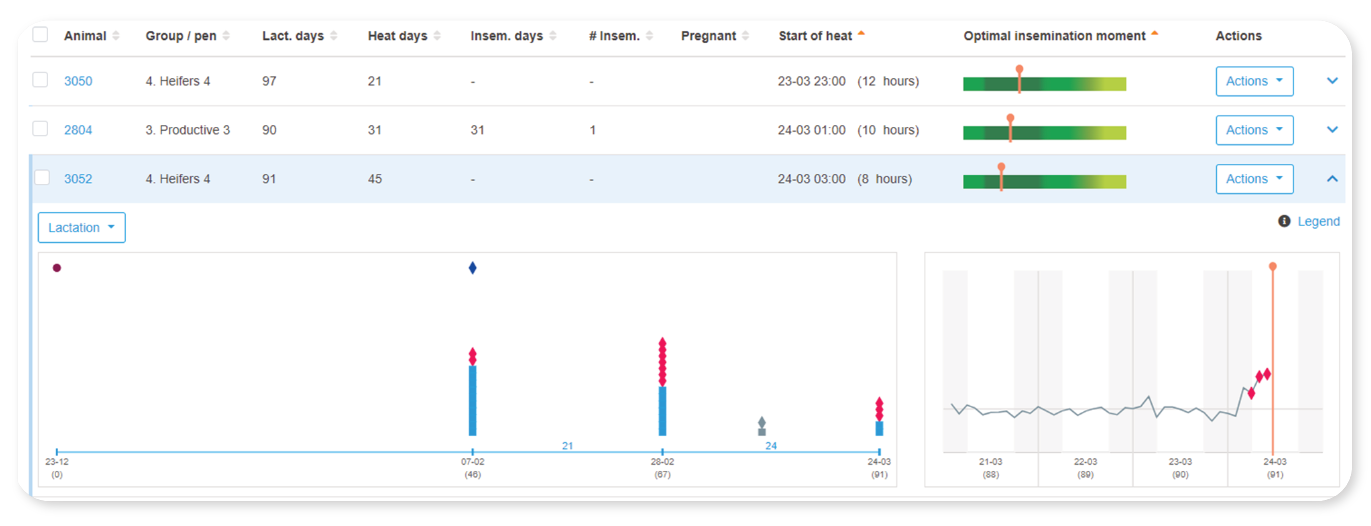
The progress bar in Velos shows the same information:

Figure 2: Example of optimum insemination moment in Velos
The current date and time is indicated by the
When to Inseminate
The optimal insemination moment depends on the start of heat.
- Check the column Start of heat on the Heat detection page, this indicates the starting point of the heat.
- Check the column Optimal insemination moment. Try to inseminate the animal when the progress bar is within the dark green area as to increase the chances of conception. As explained above, the dark green area of the optimal insemination moment has a duration of 5 hours after the start of heat, until 17 hours after the start of heat.
- If inseminated, record the insemination in Velos.
Inseminating after this time frame still has a reasonable change. If the optimal time frame is missed, it is still in many cases better to inseminate, than not to.

Example
In the example below, a cow has a confirmed heat on 07-02, 46 days after calving.
Twenty-one days after the first heat, a second heat occurred, but the farmer did not inseminate the cow. This may be due to a voluntary waiting period of 70 days.
The most recent heat, 91 days after calving, will likely result in insemination, as the cow is now within the optimal insemination period.