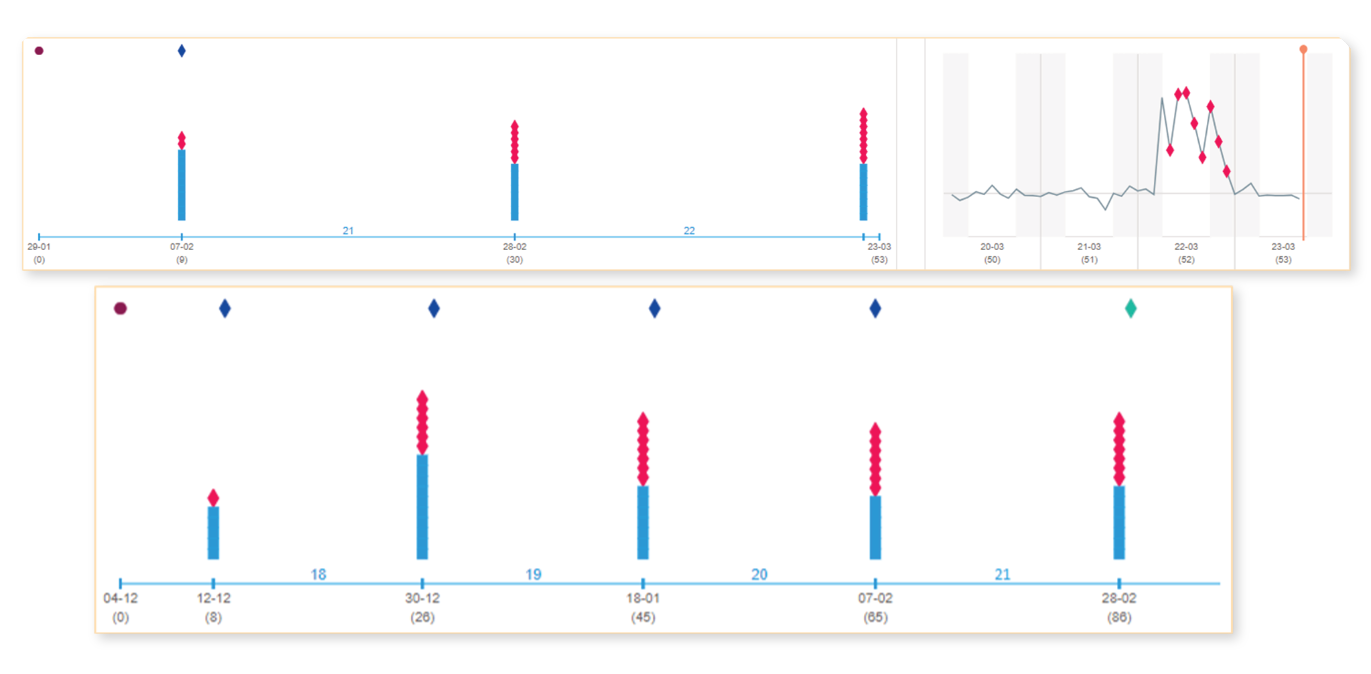
The heat detection activity view helps you understand an animal’s activity patterns and heat cycles so you can decide what action to take.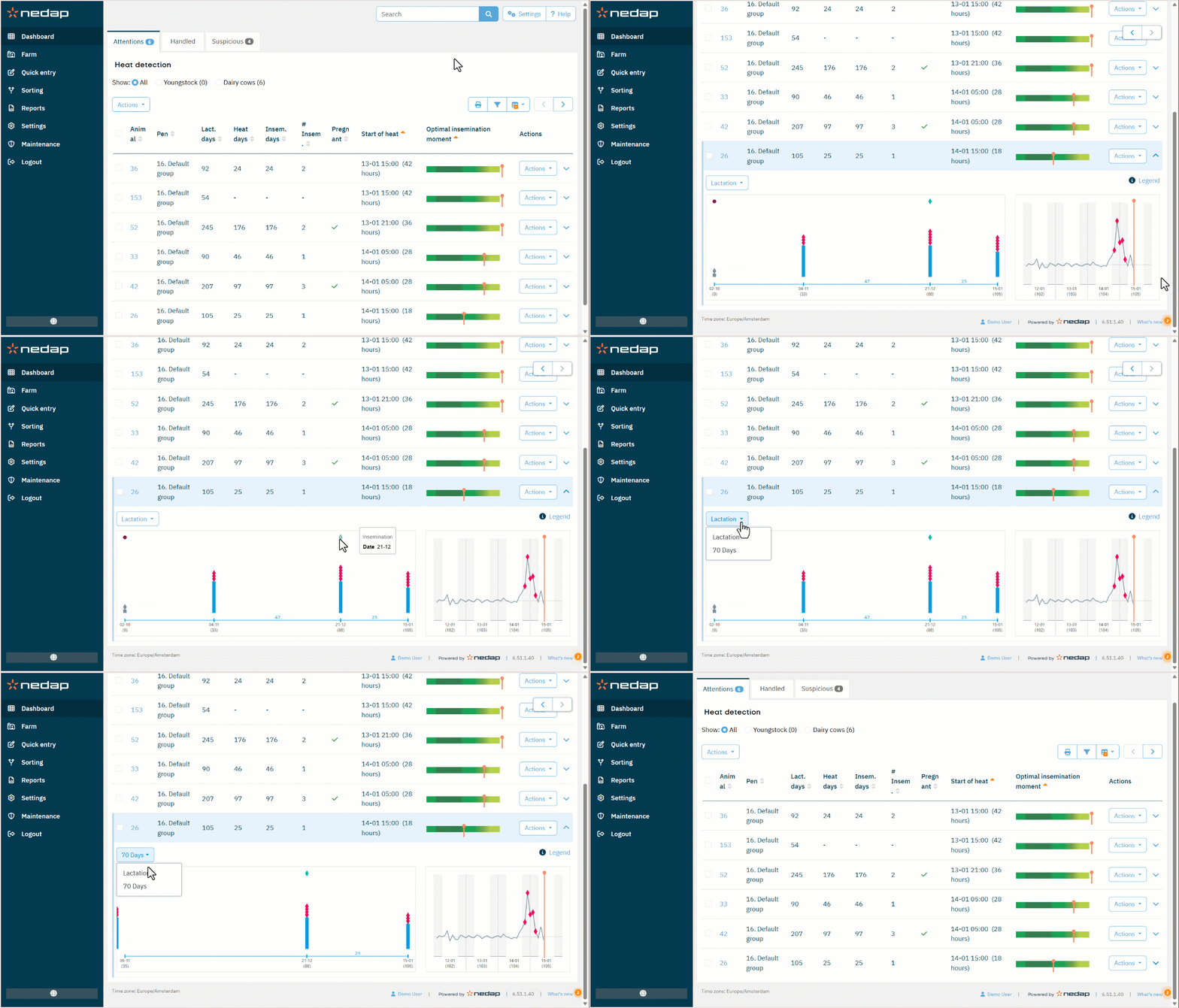
Where to Find Heat Detection Activity
You can access heat detection activity from the Heat Detection page.
From the dashboard:
- Locate the Heat Detection tile.
- Select Show attentions. The Heat Detection page opens.
- Select the arrow icon
 for an animal to open its activity details.
The activity view opens and displays the animal’s current activity pattern and heat cycle.
How to Use the Heat Detection Activity View
The activity view shows both historical data (left graph) and detailed information about the most recent heat (right graph). Use the activity level, Factor High, and heat duration indicators to determine whether the animal is ready for the next reproductive action.
The left graph shows multiple heats over time.
- View heats over the past 70 days or per lactation cycle.
- Use this graph to review the interval since the last heat detection attention.
The right graph shows the most recent heat in detail.
- Light columns represent daytime activity, with noon in the center.
- Dark columns represent nighttime activity, with midnight in the center.
Analyze heat behavior
- Review the activity increase using the blue bar.
- Review the heat duration using the red diamonds
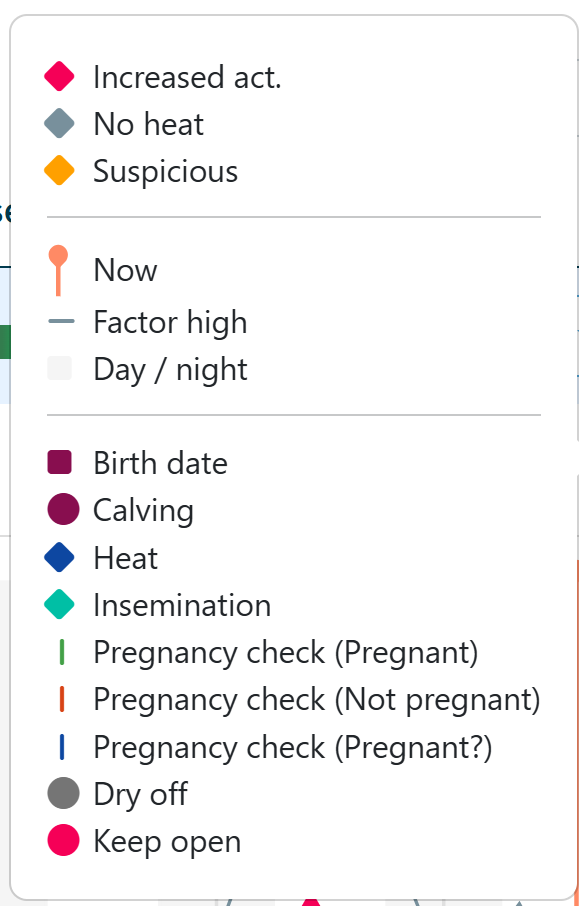
Understand the Legend
The following elements are most important in the graphs:
- Increased act (red diamond): Indicates heat detection attentions.
- No heat (grey diamond): Indicates that a heat attentions was marked as No heat.
- Suspicious (yellow diamond): Indicates a suspicious heat.
- Factor High: Indicates how much the animal's activity increased during heat. In the left graph, this is visualized by the blue bar, this shows the highest factor high measured. In the right graph the factor high is visualized by the grey line.
Example
This example shows two animals that are cyclic during the Voluntary Waiting Period. Because Velos tracks all heats throughout the lactation, the farmer can monitor each animal's cyclicity. This insight allows the farmer to plan insemination at a later stage, if needed.